• Courses
    • Who
    • Contact Me
    • Privacy Policy

ikawnoclastic thoughts

  • Video of My TEDx Talk

    March 8th, 2015
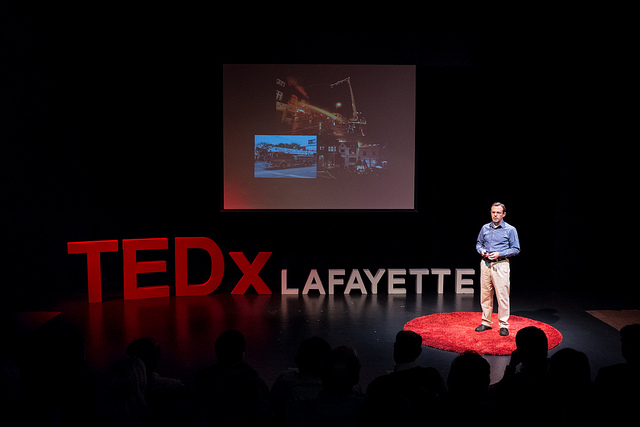
    Presenting at TEDxLafayette 2014
    Presenting at TEDxLafayette 2014

    The video of my TEDx talk for TEDxLafayette 2014, “City Full of Unmanned Vehicles” is available on Youtube. Previously, I posted the text of the talk.

    In this talk, I lay out my vision for the use of unmanned and autonomous vehicles and their uses within city limits. There are many potential benefits in terms of public safety, disaster response, personal transportation, delivery and logistics. However, a balance is needed between safety and the ability of system developers to experiment and advance the technology in the environments in which these systems will be used. I explore many of these ideas in this TEDx Talk.

    What do you think? In light of the proposed FAA regulations regarding unmanned aerial systems (released after my talk), did I present the issue with the right balance? Are unmanned and autonomous systems just too experimental at this point to be used in our cities?

    I look forward to your comments.

  • Expanding Your ZFS Pool

    February 28th, 2015
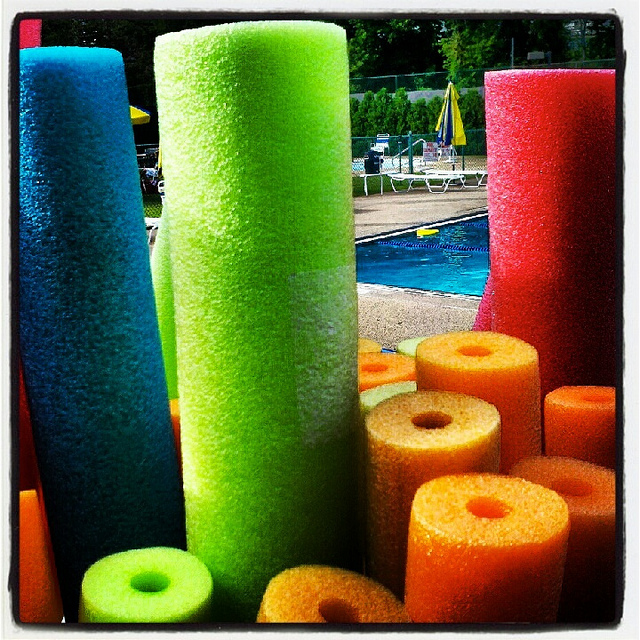
    Now that's a big pool! (CC BY-NC-SA 2.0 licensed image by Trey Ratcliff, Flickr user stuckincustoms)
    Now that’s a big pool! (CC BY-NC-SA 2.0 licensed image by Trey Ratcliff, Flickr user stuckincustoms)

    In addition to data integrity, device redundancy, and performance features, ZFS Storage Pools can also expanded in usable storage size through deduplication and compression of the data stored. In other words by shrinking raw data and removing duplicated parts of data, ZFS Storage Pools can store more data on disk. While there are some memory trade-offs using deduplication, it can provide significant storage savings for some types of stored data. There are also some significant performance benefits to compression.

    In this article, we will explore how to configure deduplication and compression for storage pools.

    Learning Objectives

    1. Learn about deduplication and configure it on a storage pool.
    2. Learn about compression and configure it on a storage pool.

    (more…)

  • Mac OS X PF Firewall: Protecting SSH from Brute Force Attacks

    January 29th, 2015
    Apple-like gate (CC BY-SA 2.0 Licensed image by Dennis Jarvis, Flickr user archer10)
    Apple-like gate (CC BY-SA 2.0 Licensed image by Dennis Jarvis, archer10)

    The OpenBSD‘s PF provides a great many features for packet filtering and network address translation. Mac OS X includes a version of PF that can be used to protect network services. In an article called “Mac OS X pf: Avoiding known bad guys“, I talk about using the Mac OS X PF firewall to protect against known bad sites. In this article, we explore a technique to protect SSH from attackers trying to gain remote access to your Mac by guessing passwords by brute force.

    Most of what I learned about PF was used at the office to protect our network. We built redundant firewalls using FreeBSD and PF rules. I started to experiment with the Mac OS X PF implementation once I learned that it was shipped in Lion (Mac OS X 10.7). I am specifically concerned about my Mac laptop systems. The information in this article can also be applied to Mac server and desktop systems too.

    (more…)

  • Accessories for Your ZFS Pool

    January 26th, 2015
    CC BY-NC-SA 2.0 Licensed Photo by Joe Shlabotnik (Flickr user: joeshlabotnik)
    Not that kind of pool accessory! (CC BY-NC-SA 2.0 Licensed Photo by Joe Shlabotnik, joeshlabnotnik)

    ZFS provides several features for Storage Pools that can improve reliability of the storage system and increase the overall performance of reading and writing data. An additional level of reliability can be attained through the use of spare devices that can replace failed storage devices in a zpool. Data read performance can be increased through the use of cache devices. Data writes can be improved with the use of log devices. This article provides a description of each type of device and the commands through which they are configured.

    Learning Objectives

    1. You will learn about hot spare devices and how to configure them.
    2. You will learn about ARC and L2ARC and how to configure cache devices.
    3. You will learn about the ZFS Intent Log and how to configure log devices.

    (more…)

  • Playing in the ZFS Pool

    January 14th, 2015
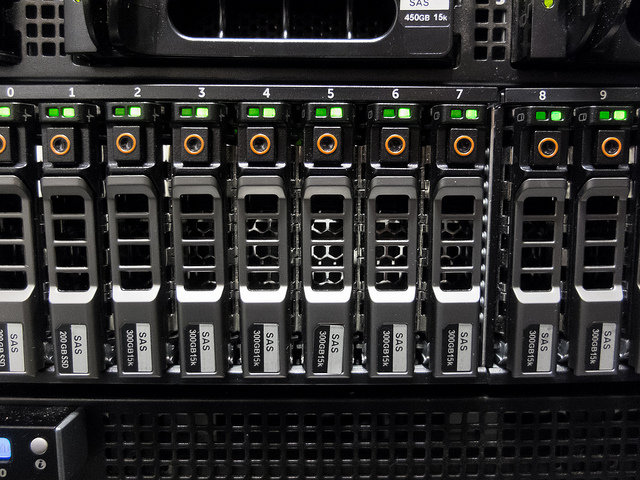
    A lot of drives for ZFS Storage Pools.  (CC BY 2.0 Licensed Image by Billie Ward, Flickr user wwward0)
    A lot of drives for ZFS Storage Pools. (CC BY 2.0 Licensed Image from Billie Ward, wwward0)

    Storage Pools are the basic method for consolidation of storage devices, data integrity, and redundancy for ZFS. Using some commands, you can quickly configure simple storage pools. In this article, we will explore the basic types of ZFS Storage Pools (stripes, mirrors, and RAID-Z), the available storage and redundancy trade-offs, and the commands used to create each type. There are several example commands included that can be used to create storage pools for experimentation and testing. Using the ZFS Playground we built in a previous article, we can experiment and test ZFS Storage Pools quickly and easily.

    Learning Objectives

    1. You will understand the basic types of ZFS Storage Pools.
    2. You will understand the tradeoffs associated with each pool type.
    3. You will be able to create basic storage pools in a virtual environment.

    (more…)

«Previous Page
1 2 3 4 5 6 7
Next Page»
Mastodon

Website Powered by WordPress.com.


Loading Comments...
 

    • Subscribe Subscribed
      • ikawnoclastic thoughts
      • Already have a WordPress.com account? Log in now.
      • ikawnoclastic thoughts
      • Subscribe Subscribed
      • Sign up
      • Log in
      • Report this content
      • View site in Reader
      • Manage subscriptions
      • Collapse this bar